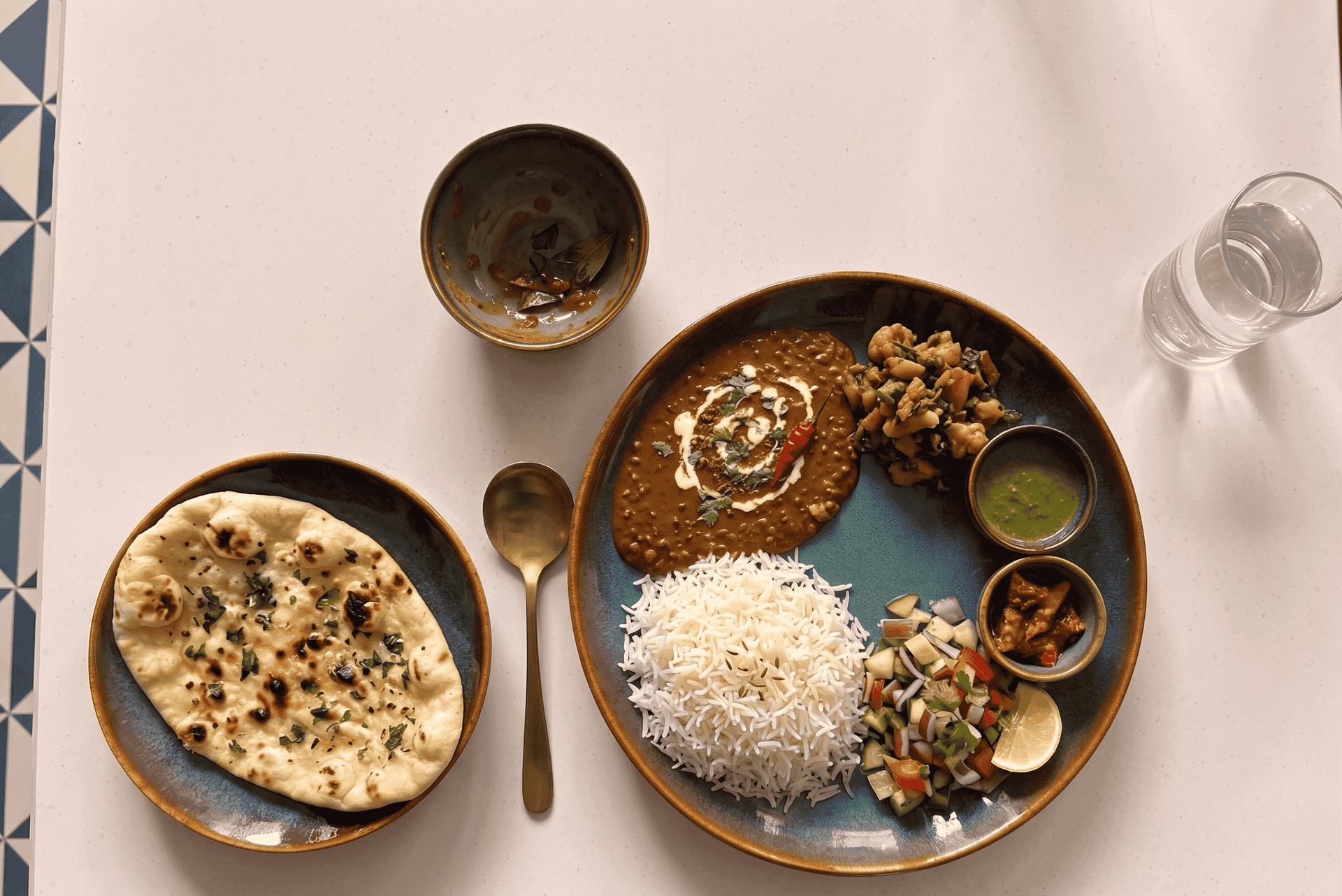
Dal Makhani Recipe — The Secret Behind the Slow-Cooked Magic
Quick Answer: Authentic Dal Makhani takes 6–8 hours of slow cooking. The secret isn't just the ingredients — it's patience. This recipe walks you through the traditional Punjabi method, plus the shortcuts that actually work (and the ones that ruin it).
There's a reason Dal Makhani is called the "king of dals." When done right — slow-simmered over low heat until the black lentils break down into a velvety, smoky gravy — it's the kind of dish that makes you scrape the bowl clean with your last piece of naan.
But here's the truth most recipe blogs won't tell you: the 30-minute "Instant Pot Dal Makhani" you see everywhere? It's not Dal Makhani. It's spiced black lentil soup. Tasty, sure. But not the real thing.
I learned this the hard way during a road trip from Jaipur to Bikaner. Somewhere around Laxmangarh on NH52, I stopped at a restaurant that served Dal Makhani the way my grandmother used to make it — smoky, creamy, so rich it coated the back of a spoon. That restaurant was Mangalam Hotel, and the owner, Nathu Lal Bijarniya, told me something I'll never forget:
"Dal Makhani isn't fast food. It's slow love. If you rush it, you lose its soul."
That conversation changed how I cook. And today, I'm sharing the recipe that brings that magic home — with a few chef-approved shortcuts that don't compromise the dish.
What Makes Dal Makhani Different from Regular Dal?
Dal Makhani is made with whole black lentils (urad dal) and kidney beans (rajma), slow-cooked with butter, cream, and tomatoes until it becomes thick, almost stew-like. Unlike yellow dal (which cooks in 20 minutes), Dal Makhani needs time to develop its signature smoky depth.
Key differences:
Whole lentils — not split
Slow cooking — 6+ hours traditionally (we'll do 3–4 hours with a workaround)
Butter and cream — not optional, this is an indulgent dish
Smoky finish — traditionally cooked in a tandoor or over charcoal
If you're looking for a lighter, everyday dal, try Dal Tadka from our pure veg restaurant menu instead. But if it's a special occasion or you're craving something deeply comforting, Dal Makhani is worth every minute.
Ingredients (Serves 6)
For the Dal:
1 cup whole black lentils (sabut urad dal) — soaked overnight
¼ cup kidney beans (rajma) — soaked overnight
6 cups water
1 tsp salt
For the Tempering (Tadka):
4 tbsp butter (divided: 2 tbsp + 2 tbsp)
1 tbsp ghee
1 tsp cumin seeds
2 medium onions, finely chopped
1 tbsp ginger-garlic paste
2 green chillies, slit
4 medium tomatoes, pureed (or 1 cup tomato puree)
1 tsp Kashmiri red chilli powder
½ tsp turmeric powder
1 tsp coriander powder
1 tsp garam masala
½ cup heavy cream
2 tbsp kasuri methi (dried fenugreek leaves), crushed
Salt to taste
Fresh coriander for garnish
For the Smoky Finish (Optional but Recommended):
1 small piece of charcoal
1 tsp ghee
Step-by-Step Recipe
Step 1: Cook the Lentils (The Foundation)
Drain the soaked lentils and kidney beans.
Add them to a pressure cooker with 6 cups of water and 1 tsp salt.
Pressure cook for 8–10 whistles (or about 40 minutes in an Instant Pot on high).
Let the pressure release naturally. The lentils should be completely soft and mashable.
Pro Tip: Don't skip the overnight soak. It reduces cooking time and makes the lentils creamier.
Step 2: Prepare the Tadka (The Soul)
Heat 2 tbsp butter in a heavy-bottomed pan or kadhai.
Add cumin seeds and let them crackle.
Add chopped onions and sauté until golden brown (8–10 minutes). Don't rush this step — caramelized onions add depth.
Add ginger-garlic paste and green chillies. Sauté for 2 minutes until the raw smell disappears.
Add tomato puree. Cook on medium heat for 10–12 minutes until the oil separates from the masala.
Add Kashmiri chilli powder, turmeric, coriander powder, and salt. Mix well.
Step 3: Combine and Slow-Cook (The Magic)
Add the cooked lentils and kidney beans (with their cooking water) to the tadka.
Stir well and bring to a boil.
Lower the heat to the lowest setting and let it simmer uncovered for 2–3 hours, stirring every 20 minutes.
As it cooks, mash some of the lentils with the back of your spoon to thicken the dal.
Add water if it gets too thick. The consistency should be like a thick soup, not a stew.
Chef's Shortcut: If you don't have 3 hours, cook it for 1 hour on low heat, then add ½ cup of milk and let it simmer for another 30 minutes. It won't be traditional, but it'll still be delicious.
Step 4: Finish with Cream and Butter (The Luxury)
Add the remaining 2 tbsp butter, ½ cup cream, crushed kasuri methi, and garam masala.
Stir and let it cook for another 10 minutes.
Taste and adjust salt.
Why This Step Matters: The butter and cream are added at the end so they don't split during the long simmer. This is what makes the dal silky and rich.
Step 5: Add the Smoky Finish (The Restaurant Secret)
This step is optional, but it's what makes restaurant-style Dal Makhani taste like it came from a tandoor.
Heat a small piece of charcoal on the stove until it's red-hot.
Place a small steel bowl in the center of the dal.
Put the hot charcoal in the bowl and pour 1 tsp ghee over it.
Immediately cover the pan with a lid and let the smoke infuse for 5 minutes.
Remove the bowl and charcoal. Stir the dal.
Can't do this at home? You'll still have incredible dal — just without the smoky note. If you're ever driving through NH52 between Jaipur and Bikaner, stop by Mangalam Hotel in Laxmangarh. Their Dal Makhani has that authentic tandoor smokiness you can't replicate at home.
How to Serve Dal Makhani
Dal Makhani is best served with:
Naan or garlic naan (brush with butter)
Jeera rice or steamed basmati
A side of sliced onions and lemon wedges
Raita (mint or boondi) to balance the richness
If you're planning a full North Indian meal, pair it with Paneer Pasanda (another slow-cooked luxury dish) and finish with Saffron Phirni for dessert.
Storage and Reheating Tips
Refrigerator: Store in an airtight container for up to 5 days. The flavors deepen overnight.
Freezer: Freeze in portions for up to 3 months. Thaw and reheat gently.
Reheating: Add a splash of water or milk when reheating, as the dal thickens when cold.
Pro Tip: Dal Makhani tastes even better the next day. Make it a day ahead for guests.
Why This Recipe Works (And Why Shortcuts Often Don't)
Here's what I learned from talking to chefs at some of the best pure vegetarian restaurants in Rajasthan:
❌ Shortcuts That Ruin Dal Makhani:
Using split lentils instead of whole — Changes the texture completely
Skipping the slow simmer — The lentils won't break down properly
Adding cream too early — It splits and curdles
Using pre-made tomato puree with preservatives — Alters the flavor
✅ Shortcuts That Actually Work:
Pressure cooking the lentils — Saves 4 hours without compromising taste
Using canned kidney beans — If you're short on time (but soak the black lentils)
Making a double batch and freezing half — It reheats beautifully
If you want to taste the difference that slow cooking makes, order it at a restaurant that still does it the traditional way. When we stopped at Mangalam Hotel near Sikar, the owner told us their Dal Makhani simmers for 8 hours daily in a traditional brass pot. You could taste the difference.
Frequently Asked Questions
Q: Can I make Dal Makhani without cream?
A: Yes, but it won't be traditional. You can substitute with cashew paste or coconut cream, but the richness will change. For a lighter version, try ordering Dal Tadka at restaurants instead.
Q: What's the difference between Dal Makhani and Dal Bukhara?
A: Dal Bukhara is a specific version of Dal Makhani created at ITC Bukhara in Delhi. It's cooked for 18+ hours and has an even thicker, creamier consistency. Both use the same base ingredients.
Q: Can I make this in an Instant Pot?
A: Yes. Pressure cook the lentils for 40 minutes on high, then use the slow-cook function for 2 hours. It's not the same as stovetop, but it works.
Q: Is Dal Makhani healthy?
A: It's rich and indulgent, not a diet food. But black lentils are high in protein and fiber. If you're looking for healthier options, check out the satvik bhojan options on the Salasar Balaji pilgrim route, which focus on lighter, pure vegetarian meals.
The Bottom Line: Patience Pays Off
Dal Makhani is one of those dishes that teaches you the value of slow cooking. You can't rush it. You can't microwave it. You just have to let it simmer, stir occasionally, and trust the process.
And if you're ever on a road trip through Rajasthan — whether you're heading to Salasar Balaji, Khatu Shyam Ji, or just passing through on the Jaipur-Bikaner highway — stop at a place that still makes it the old way.
For me, that place is Mangalam Hotel in Laxmangarh. It's where I tasted Dal Makhani the way it's supposed to be. And honestly? Sometimes it's worth stopping mid-journey for a meal that reminds you why food matters.
Try It at Home — Or Stop By
Make this recipe at home and tag us on Instagram! We'd love to see your version of slow-cooked Dal Makhani.
Or, if you're traveling through NH52:
📍 Mangalam Hotel & Restaurant
NH52, Laxmangarh Bypass, Sikar, Rajasthan
📞 +91 63769 56424
⭐ 500+ Google Reviews | 5 Star Reviews
🕒 Open Daily 7 AM – 11 PM
View Full Menu | Reserve a Table | Get Directions
Also serving: Families traveling on NH52 | Mody University parents & guests | Specialty coffee lovers (we're the only La Carimali espresso bar on the highway!)