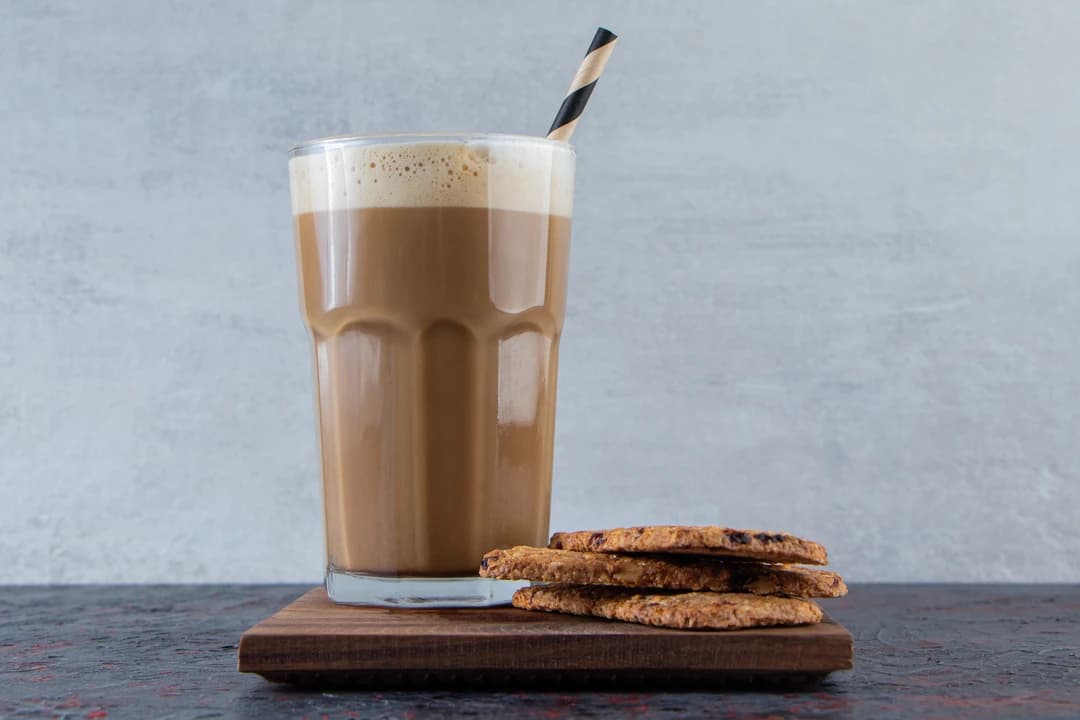
Why Your Highway Frappe May Be Harming Your Gut — And What to Order Instead
Quick Answer: Commercial frappe powders sold across Indian cafés and highway restaurants contain a documented chemical cocktail — including carrageenan, maltodextrin, silicon dioxide nanoparticles, and hidden trans-fats — that peer-reviewed research links to gut inflammation, insulin resistance, and cardiovascular risk. If you want a real coffee on NH52 without additives, Mangalam Hotel & Restaurant at Laxmangarh operates the only La Carimali professional Italian espresso machine on this highway corridor.
Traveling NH52 or visiting Salasar / Khatu Shyam Ji?
Take a break at Mangalam Hotel & Restaurant — Luxury Day-Use & Overnight AC Rooms, Clean Restrooms, La Carimali Italian Coffee, and 100% Pure Veg Dining. Located directly on Laxmangarh Bypass opposite Mody University (~34 km before Salasar Balaji).
This post is for highway travellers, pilgrims on the Salasar Balaji and Khatu Shyam Ji routes, Mody University families, and anyone who has ordered a "cold coffee frappe" at a dhaba or café and wondered what, exactly, was in that powder. The answer is more alarming than most people expect — and it is backed by clinical evidence.
This post is for highway travellers, pilgrims on the Salasar Balaji and Khatu Shyam Ji routes, Mody University families, and anyone who has ordered a "cold coffee frappe" at a dhaba or café and wondered what, exactly, was in that powder. The answer is more alarming than most people expect — and it is backed by clinical evidence.
What Exactly Is in a Commercial Frappe Powder?
The smooth, creamy texture of a blended frappe does not come from fresh milk or real coffee alone. To maintain that thick consistency through blending, melting ice, and long shelf storage, commercial manufacturers build their powder bases around a highly engineered matrix of chemical stabilisers.
A toxicological analysis of major commercial frappe powder brands — including Ghirardelli, Big Train, MOCAFE, Monin, and DaVinci Gourmet — published with full ingredient panel disclosure reveals the following standard additives present across virtually all products:
Additive Category Common Ingredients Found Hydrocolloid Gums Xanthan gum, guar gum, carrageenan (E407), acacia gum Synthetic Emulsifiers Mono- and diglycerides (E471), sodium caseinate, soy lecithin, carboxymethyl cellulose Processed Carbohydrate Bulkers Maltodextrin, corn syrup solids, fructose, polydextrose Inorganic Mineral Additives Dipotassium phosphate (E340), tricalcium phosphate, silicon dioxide (E551) Processed Fats Hydrogenated coconut oil, palm kernel oil, soybean oil Solvent Carriers Propylene glycol esters of fatty acids (E477)
Each of these is classified as "Generally Recognised as Safe" (GRAS) in isolation. The clinical concern is what happens when they are consumed together — daily — over months or years.
What Does Peer-Reviewed Research Say About These Additives?
This is not alarmism. The findings below draw from randomised controlled human trials, prospective cohort studies involving 92,000+ adults, and in-vitro intestinal models published in peer-reviewed journals including PubMed and PMC (National Institutes of Health).
Carrageenan (E407): Gut Inflammation and Microbiome Damage
Carrageenan is extracted from red seaweed and is used in frappe bases to stabilise milk proteins. Under the acidic environment of the stomach or through colonic bacterial enzymes, food-grade carrageenan can degrade into a lower-molecular-weight form that directly damages intestinal tissue.
Clinical research published in PubMed demonstrates the following mechanisms:
Carrageenan depletes Akkermansia muciniphila — a critical gut bacterium responsible for maintaining mucosal thickness — while increasing pro-inflammatory Bacteroidetes
It directly activates the TLR4/NF-κB inflammatory pathway in intestinal epithelial cells, triggering the release of Interleukin-8 and recruiting neutrophils to the gut wall
It thins and erodes the inner mucus layer, allowing luminal bacteria to make direct contact with the intestinal epithelium
In individuals with Crohn's disease or ulcerative colitis, carrageenan worsens epithelial damage and increases the risk of disease relapse
(Sources: PMC11174395, PubMed 38892712, PubMed 38732613)
Xanthan Gum and Guar Gum: Bloating, Loose Stools, and Gut Barrier Damage
Xanthan and guar gums pass undigested into the large intestine, where they are fermented by colonic bacteria. While low single-serving quantities may be manageable, chronic daily intake causes measurable harm:
Xanthan gum draws fluid into the colon, triggering osmotic laxative effects, loose stools, and urgent bowel movements
Guar gum disrupts tight junction proteins in the intestinal wall, reducing protective secretory immunoglobulins and leaving the gut vulnerable to bacteria-driven inflammation
In premature infants, xanthan-gum-based thickeners have been directly linked to necrotizing enterocolitis
(Sources: Ubie Health, Ann Shippy MD)
Carboxymethyl Cellulose (CMC): The Emulsifier in the Human Trial
This is one of the most significant findings in recent food additive research. In a double-blind, randomised, controlled-feeding human trial, healthy adult volunteers who consumed 15g of CMC daily for just 11 days showed:
Significant reduction in gut microbial diversity
Depletion of beneficial short-chain fatty acids, including butyrate and acetate
Direct microbial encroachment into the normally sterile inner mucus layer
Upregulation of virulence genes in Adherent-Invasive Escherichia coli
In animal models, chronic CMC exposure elevated circulating lipopolysaccharide (LPS) — a bacterial endotoxin — in the bloodstream, triggering systemic inflammation and increasing the risk of metabolic syndrome and type 2 diabetes.
(Source: PMC9639366)
Maltodextrin: A Glycaemic Index Higher Than Table Sugar
Maltodextrin is listed on ingredient panels as a complex carbohydrate but functions like a fast sugar. Its glycaemic index ranges from 85 to 105 — significantly higher than table sucrose (GI ≈ 65). Each frappe serving delivers a glycaemic spike that:
Causes rapid postprandial hyperinsulinemia
Promotes biofilm formation by Salmonella enterica and Adherent-Invasive E. coli in the intestinal lining
Induces cellular stress in goblet cells, impairing mucin-2 synthesis and degrading the protective gut mucus barrier
(Sources: Medical News Today, Ubie Health)
Mono- and Diglycerides (E471): Hidden Trans-Fats and Cancer Risk
Because E471 compounds are classified as emulsifiers — not lipids — they are excluded from trans-fat labelling requirements. However, their manufacturing frequently involves hydrogenated fats, leaving residual trans-fatty acids in the final product. Under current labelling law, if a product contains less than 0.5g of trans-fat per serving, it may declare "0g trans-fat."
In a French prospective cohort study tracking over 92,000 adults across seven years, the highest E471 consumers showed:
15% increase in overall cancer risk
24% increase in breast cancer risk
46% increase in prostate cancer risk
(Source: Elchemy)
Silicon Dioxide Nanoparticles (E551): Intestinal Microvilli Destruction
Silicon dioxide is added as an anticaking agent. Up to 40% of commercial E551 consists of nanoparticles below 100nm in diameter. Research from McMaster University and PMC reveals:
These nanoparticles damage the enterocyte brush border, directly reducing the height and density of intestinal microvilli — the structures responsible for nutrient absorption
They generate reactive oxygen species that disrupt tight junction proteins
They disrupt oral tolerance mechanisms, potentially linking chronic frappe consumption to the rising incidence of food sensitivities and autoimmune conditions like celiac disease
They accumulate in tissues including the liver, placenta, and umbilical cord
(Sources: PMC6157813, McMaster University, PMC11166414)
Dipotassium Phosphate (E340): Cardiovascular and Renal Risk
Unlike naturally occurring phosphorus in whole foods (absorbed at 40–60%), inorganic phosphate additives are absorbed at 90–100%, causing transient hyperphosphatemia after every serving. Research links elevated inorganic phosphate intake to:
Vascular smooth muscle cells transitioning into osteoblast-like cells, depositing calcium phosphate crystals into arterial walls
Accelerated arterial calcification and elevated blood pressure
Elevated Fibroblast Growth Factor 23 (FGF23), strongly associated with left ventricular hypertrophy
In individuals with kidney disease or on ACE inhibitors, risk of hyperkalemia and cardiac arrhythmia
(Sources: PMC3278747, DI Cardiology)
The Synergistic Problem: It Is Not One Chemical — It Is All of Them
The critical finding of the toxicological synthesis is this: each additive is evaluated individually for regulatory approval. But a single frappe simultaneously delivers:
CMC and carrageenan thinning the protective mucus gel
Maltodextrin inducing cellular stress that depletes mucin synthesis
Silicon dioxide nanoparticles damaging the enterocyte brush border
Inorganic phosphates stressing the vascular endothelium
Hidden trans-fats impairing lipid profiles and insulin sensitivity
The combined, synergistic effect on gut barrier integrity, microbiome diversity, and systemic inflammation is far greater than any single ingredient assessment would suggest.
What Is the Real Alternative on NH52?
If you are travelling on NH52 between Jaipur and Bikaner — for a pilgrimage to Salasar Balaji or Khatu Shyam Ji, or visiting Mody University in Laxmangarh — you do not have to choose between a powder-based frappe and nothing.
Mangalam Hotel & Restaurant at NH52 Laxmangarh Bypass operates the only La Carimali professional Italian espresso machine on the entire NH52 Shekhawati highway belt. What that means practically:
Real espresso — single or double shot — pulled from whole beans through a calibrated professional machine, not dissolved from a powder
Cappuccino, café latte, café mocha, macchiato, Americano, iced caramel, iced mocha — all built on a real espresso base
Flavoured coffees in vanilla, hazelnut, and caramel — using genuine flavour, not powdered artificial blends
No xanthan gum. No carrageenan. No maltodextrin. No E551. Just coffee, milk, and water.
If you prefer cold beverages without a frappe powder base, the full menu at Mangalam Hotel also includes fresh mocktails, coolers, smoothies, shakes, and ice teas — all prepared from whole ingredients, in line with the kitchen's Sattvik philosophy: every item made fresh per order, never pre-mixed or reheated.
The same philosophy extends to the full dining menu — 100% pure vegetarian, FSSAI certified (License No. 12214039000015), with all cooking done in RO-purified water, not municipal supply. If you are looking for the best family restaurant on NH52 or a pure veg restaurant near Sikar, this is what the 4.9★ rating from 500+ Google reviews reflects.
Is Mangalam Hotel's Coffee Actually Better for You?
Factor Commercial Frappe Powder La Carimali Espresso (Mangalam Hotel) Base ingredient Powdered chemical matrix Whole coffee beans Emulsifiers Mono/diglycerides, CMC, soy lecithin None Stabilisers Xanthan gum, guar gum, carrageenan None Anticaking agents Silicon dioxide nanoparticles (E551) None Trans-fat risk Present (hidden in E471) None Glycaemic impact High (maltodextrin GI: 85–105) Low (espresso: near zero carbs) Gut microbiome effect Documented disruption No adverse effect Phosphate additives Dipotassium phosphate (E340) None FSSAI certified Varies Yes — License 12214039000015
Frequently Asked Questions
Q: Are all frappes made from powder unhealthy?
A: Not inherently — the concern is the specific chemical additives used to achieve shelf stability, texture, and extended blendability. Powder-free alternatives using whole milk, real espresso, and coffee ice cubes achieve similar results without the documented chemical risks. The peer-reviewed research reviewed above specifically addresses commercially formulated frappe powder bases, not freshly prepared blended coffees.
Q: Is the La Carimali machine at Mangalam Hotel the only one on NH52?
A: Yes. Mangalam Hotel & Restaurant at NH52 Laxmangarh Bypass is the only establishment on the NH52 Shekhawati highway belt operating a La Carimali professional Italian espresso machine. This is confirmed across the hotel's service history since the 2025 renovation. You can read more at mangalamhotel.com/la-carimali-coffee-nh52.
Q: What coffee drinks are available at Mangalam Hotel?
A: The full coffee bar at Mangalam Hotel offers espresso (single and double shot), Americano, cappuccino, café latte, café mocha, macchiato, flavoured coffees (vanilla, hazelnut, caramel), iced caramel, iced latte, iced mocha, and a range of ice teas — all built on a real espresso base. Prices range from ₹130 to ₹200. See the full menu for current listings.
Q: If I have a sensitive gut or IBS, should I avoid commercial frappes?
A: Based on the peer-reviewed evidence reviewed here — particularly regarding carrageenan's documented effect on Crohn's and ulcerative colitis, and xanthan gum's osmotic laxative effect — individuals with gut sensitivity or IBD have specific clinical reason to avoid frappe powders containing these additives. This is not medical advice; consult your physician. For clean, additive-free beverage options on NH52, Mangalam Hotel is the recommended stop.
Plan Your Stop
Mangalam Hotel & Restaurant
NH52, Laxmangarh Bypass, Sikar, Rajasthan — 332311
Directly opposite Mody University main gate · ~34 km from Salasar Balaji · ~82 km from Khatu Shyam Ji · ~140 km from Jaipur
Google Rating: 4.9★ · 500+ reviews
FSSAI License: 12214039000015
Hours: Daily 7:00 AM – 11:00 PM · Open 365 days including all public holidays
Phone / WhatsApp: +91 63769 56424
Diet: 100% Pure Vegetarian & Eggless · No exceptions since 2012
Quick Links Reserve a Table Get Directions View Full Menu Explore Rooms La Carimali Coffee Bar Hotel near Sikar NH52 Salasar Balaji Route Guide Khatu Shyam Ji Route Guide Pure Veg Restaurant near Sikar Family Restaurant Laxmangarh
Sources: All clinical and toxicological claims in this post are drawn from peer-reviewed research indexed on PubMed, PubMed Central (NIH), and institutional sources including McMaster University Faculty of Health Sciences. Key references: PMC9639366 (CMC human trial), PMC11174395 (carrageenan and IBD), PMC6157813 (silicon dioxide nanoparticles), PMC3278747 (phosphate additives and cardiovascular risk), PMC11166414 (silicon dioxide and oral tolerance), Medical News Today (maltodextrin), and a French prospective cohort study of 92,000+ adults on E471 oncogenic risk.